UALink 1.0 Fundamentals Class - Austin Labs Testing and Training

Schedule Class

We offer multiple ways to learn

Flexible delivery options designed to fit your team’s schedule, scale, and learning style.

Online Training

Online Training

Self-paced modules built for engineers who want to learn on their own schedule. Includes videos, text explanations, interactive checkpoints, and hands-on exercises. All based on the same course material used in our live sessions.
    Private Training

    Private Training

    A dedicated instructor-led session for organizations that want to train multiple engineers at once. Your team gets direct access to an expert, tailored pacing, and the ability to ask questions specific to your environment or use cases.
      Public Training

      Public Training

      Quarterly live sessions open to individual engineers or small groups. Join a scheduled class, learn alongside peers from across the industry, and get real-time instruction using the same core course content.

        Overview

        Course Outline

        What to Expect

        Austin Labs Testing Services

        Overview

        Get concrete, detailed answers to your questions:

        • What is UALink?
        • How is UALink used in real systems?
        • What is the UPLI Interface?
        • What are TL Flits vs DL Flits?
        • What changes are made to 802.3 Phy?
        • How does UALink enable Low latency?
        • How is a UALink system managed?

        Learn these things and more in Austin Labs UALink 1.0 Fundamentals training. Based on the latest UALink specifications as well as real world test findings from Austin Labs Testing Services, this training covers the UALink protocol specifically for those with little time who need to understand the fundamentals from a high level.

        This class is designed for engineering-minded individuals such as test leads, program managers, design engineers, technical/product field support, and storage/system administrators who need the basics behind the 1.0 release.

        Course Outline

        • Fabric Architecture
        • UALink Protocol Level Interface
        • UPLI Interface
        • Reliability, Availability, Security (RAS)
        • Transaction Layer
        • Flow Control
        • Data Link
        • Link Level Replay
        • Physical Layer
        • 802.3 Changes
        • Manageability and Security

        What to Expect

        Insight into the standard based on our real world testing experience

        Instruction from experts with over 20 years of experience in storage and networking

        Fabric Architecture

        UALink establishes a high-performance fabric designed specifically for accelerator-to-accelerator communication. Its structured hierarchy of switches, accelerators, nodes, and pods creates a scalable backbone that delivers massive bandwidth with consistently low latency. The basic encoding of PAM4

        • Nodes and Pods
        • Accelerators and Switches
        • Integration into datacenters
        • Breakdown of components within a node
        UPLI Interface

        The UALink Protocol Level Interface defines how devices exchange data and control information through structured Requests and Responses. This section explains how UPLI organizes traffic and manages flow control.

        • Originator vs Completer
        • UPLI Channels and Beats
        • Reads, Writes, and Atomic operations
        • UPLI Flow Control
        • Full transaction path
        Manageability and Security

        UALink introduces centralized management through the Pod Controller, which supervises and coordinates up to 1024 accelerators within a single pod. Its security framework, UALinkSec, protects traffic across the fabric and can integrate with platforms that support Confidential Computing.

        Transaction Layer

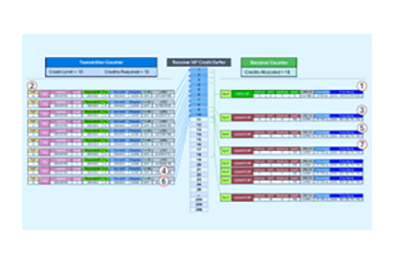
        The UALink Transaction Layer is responsible for transforming UPLI beats into 64-byte TL Flits and reconstructing them on the receive side. It also manages flow control and uses address caching to reduce overhead and improve efficiency across the fabric.

        • 64-byte TL Flit
        • Address Caching
        • Efficiency Examples
        • Flow Control
        Data Link

        The Data Link Layer aggregates 64-byte TL Flits into 640-byte DL Flits for transport across the physical layer. It also provides a lightweight messaging service between link partners, enabling UART-style communication, pacing, and replay mechanisms for reliable delivery.

        • 640-byte DL Flit
        • DL Message Service
        • Flit Packing
        • Link Level Replay
        Physical Layer

        The UALink Physical Layer builds on the 802.3 Ethernet PHY, supporting 1, 2, or 4 lanes at 212.5Gbps while adapting the encoding and FEC structures to align with UALink’s 640-byte DL Flit format. This section highlights the PHY-level changes that enable low-latency, high-reliability operation.

        • RS and PCS Changes
        • Low-Latency FEC Interleave
        Reliability, Availability, and Serviceability (RAS)

        This section explores how UALink’s RAS framework detects faults, isolates failing components, and restores normal operation across accelerators and switches.
        Austin Labs Testing Services

        We test customers’ products quickly and thoroughly in an enterprise environment to ensure that products will survive the rigorous demands of mission-critical applications. Customers come to us for our fast turnaround, superior analysis, excellent results, competitive prices, and, of course, 100% confidentiality. We work hand-in-hand with our customers’ engineers to provide solutions, not just information. We provide not only the results of our tests, but also the debug, analysis, and regression testing that is needed to ensure that the products we test perform as expected—not for our customers, but for your customers.

        About Austin Labs

        Austin Labs is the industry leading third-party testing and training facility. With state-of-the-art test facilities located around the world and industry expertise Austin Labs takes advantage of the wide array of Teledyne LeCroy tools for validation testing of products from server/storage to client systems with expertise in PCIe, NVMe, CXL, Ethernet, Fibre Channel, SAS, SATA, USB, Thunderbolt, Bluetooth, WiFi, HDMI, DisplayPort, MiPi C/D-Phy, MiPi M-Phy, and many others.

        Our engineers helped develop some of the industry’s key technologies and continue to have a vigorous passion for improving products and sharing their knowledge. This experience and enthusiasm translates into the highest quality testing and training services possible.

        For more information please contact:

        [email protected]

        Online Training

        Our online training programs deliver the same comprehensive material offered in our live sessions, but with even deeper explanations, supplemental visuals, and interactive checkpoints, all in an asynchronous format you can complete at your own pace. Each course is designed to help engineers build a strong conceptual foundation while giving them the flexibility to learn whenever and wherever it fits their schedule.

        eLearning modules
        Module Based learning

        Each course is divided into focused modules that break down complex topics into manageable segments. This structure helps learners absorb information more effectively and build concepts step by step.

        Instructor Led Video
        Instructor Led Video

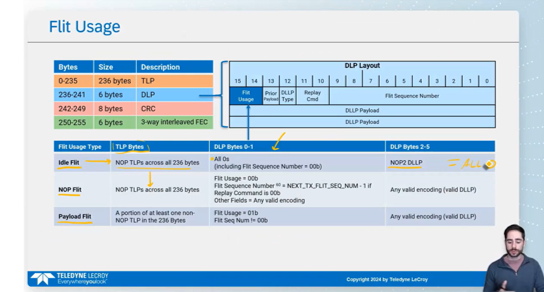
        Every module includes full video instruction led by an expert, guiding you through the material just as you would experience in a live class. These videos are supported by additional text explanations and graphics to clarify advanced protocol behaviors and architectural details.

        Interactive Checkpoints
        Interactive Checkpoints

        Throughout the course, interactive elements and knowledge checkpoints reinforce key concepts and ensure you’re confidently progressing through the material. These activities help solidify understanding before moving on to more advanced topics.

        Live Training

        Our live training programs deliver a fully interactive, instructor-led learning experience either virtually or on-site at your location. Every session is taught in real time by a protocol expert and includes the same in-depth material outlined in the course description, plus direct access to an instructor who can answer questions and clarify complex concepts.

        Trainer teaching a classroom full of engineering students
        Private Training

        Your team receives a dedicated, tailored training session focused on your specific needs. We can deliver the course at your location or host your group at one of our training facilities.

        Person watching a virtual training session
        Public Training

        Join one of our scheduled sessions offered throughout the year. These open classes are ideal for individual engineers or small teams who want to learn alongside peers from across the industry.

        Have a Question or Want to Schedule a Class?

        We’re here to help and answer any question you might have. We look forward to hearing from you