Data Center Power Conversion and Distribution

OverviewOverview
Solid-State TransformersSolid-State Transformers
BESS & UPSBESS & UPS
800 Vdc Distribution800 Vdc Distribution
PSUsPSUs
Compute RacksCompute Racks
ServersServers
ResourcesResources

Data Center Power Conversion Infrastructure is Rapidly Evolving

Artificial Intelligence (AI) data center buildouts are driving rapid innovation to meet power demands, improve efficiency, accelerate deployment and reduce peak power requirements during training and demand spikes. Data center power conversion technologies include:

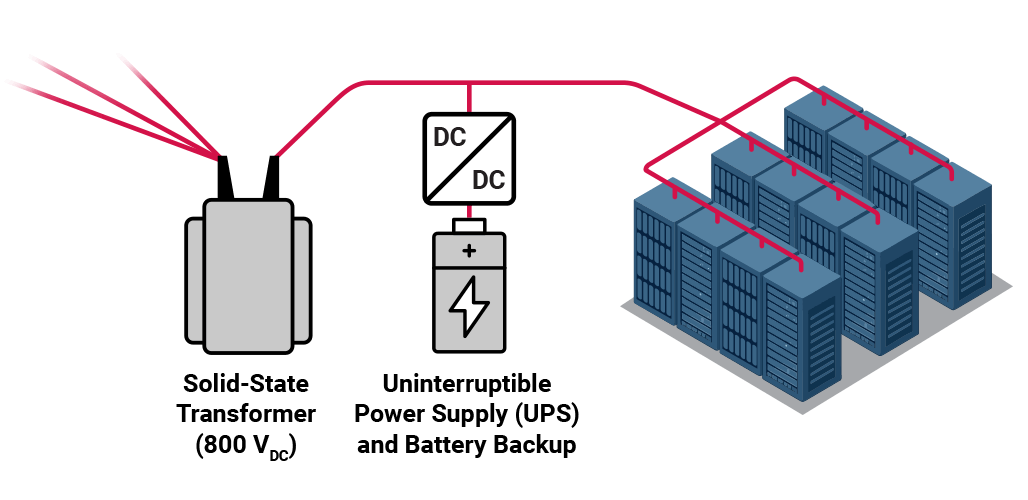
  • 10 to 34.5 kV Medium-Voltage Solid-State Transformers (SST)
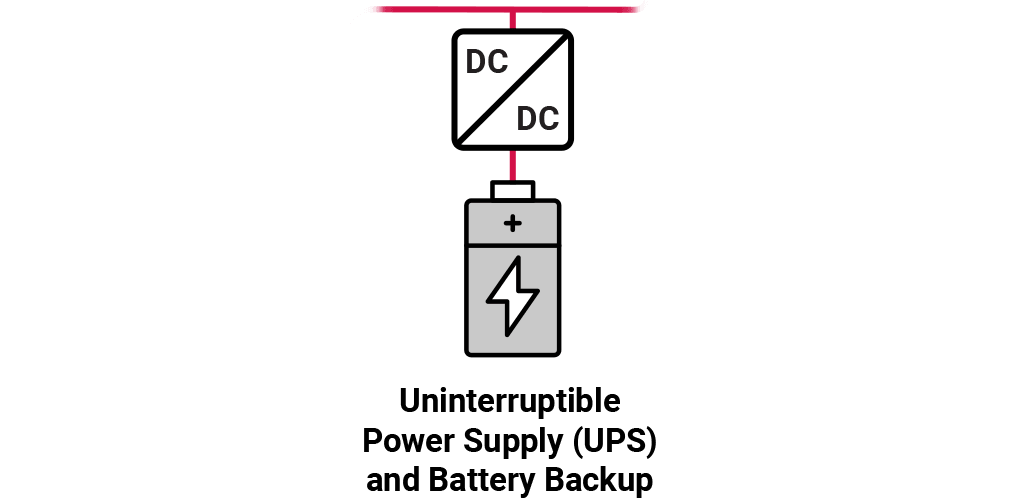
  • Battery-Energy-Storage Systems (BESS) for Backup and Peak-Load Shaving
  • 800 Vdc Power Distribution for High Power
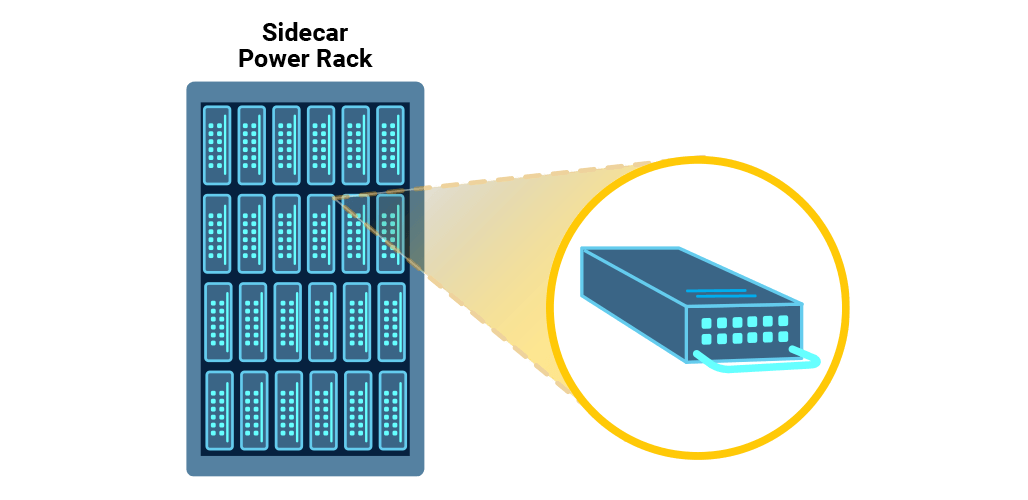
  • 100 kW Power Shelves with High Efficiencies enabling 1 MW racks

Teledyne LeCroy Helps Engineers Advance and Optimize Data Center Power Conversion Infrastructure

Teledyne LeCroy understands the innovations underway in data center power distribution and can best assist in ensuring needs are met to provide current and next-generation data center power conversion infrastructure.

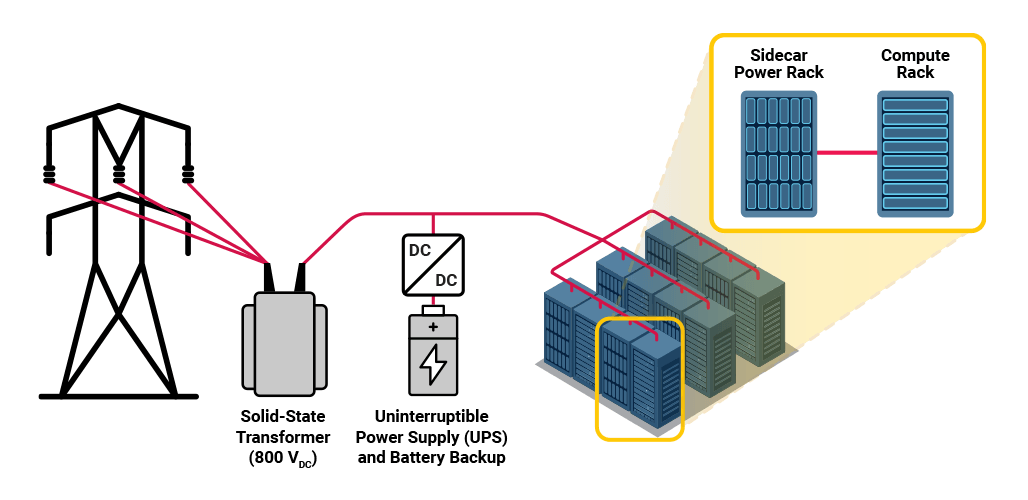
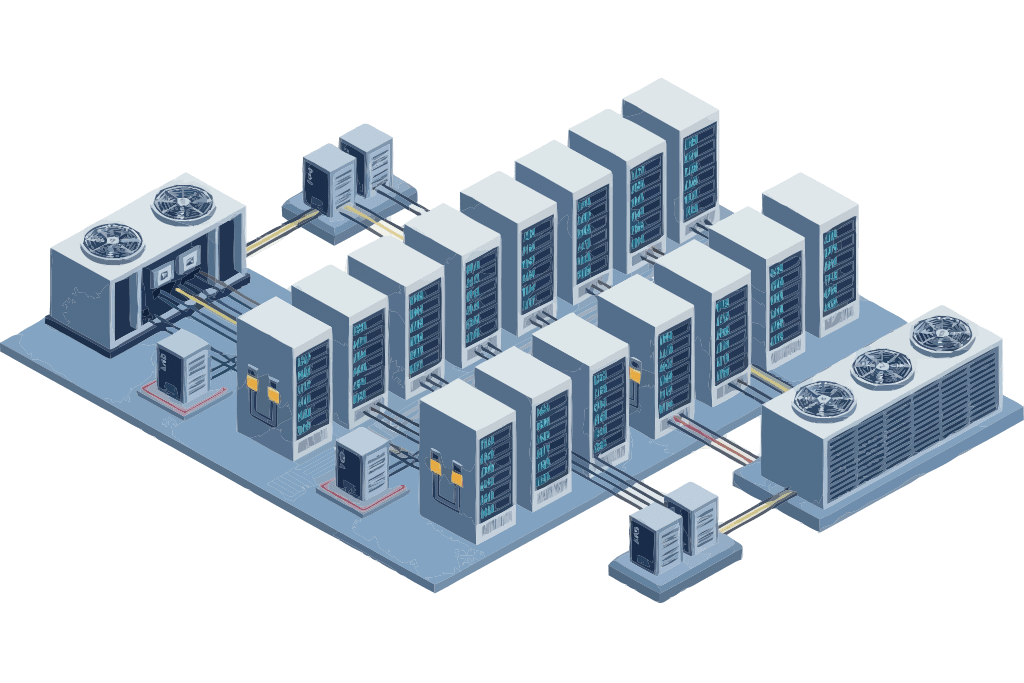
Line drawing showing power distribution for a data center from utility supply to compute rack (server) use.
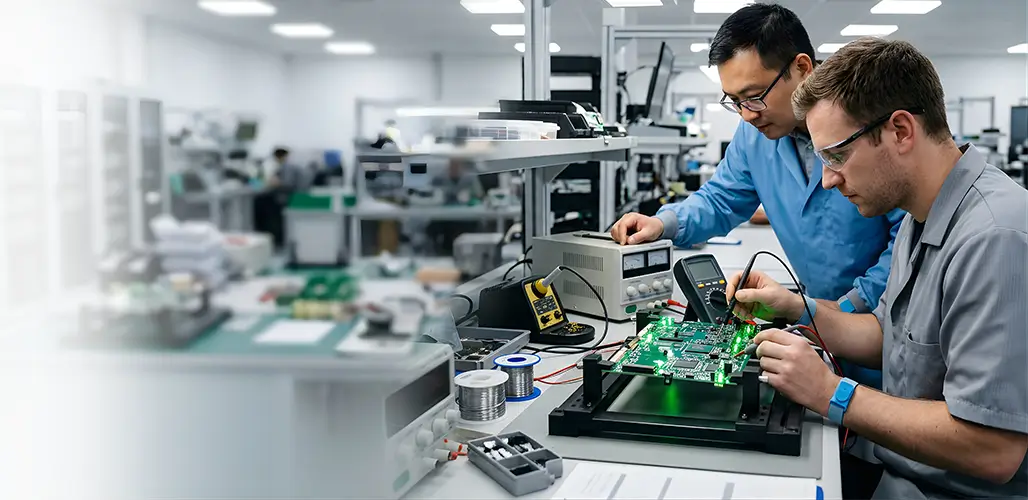
Engineers testing an embedded system using in a power conversion system for a data center.
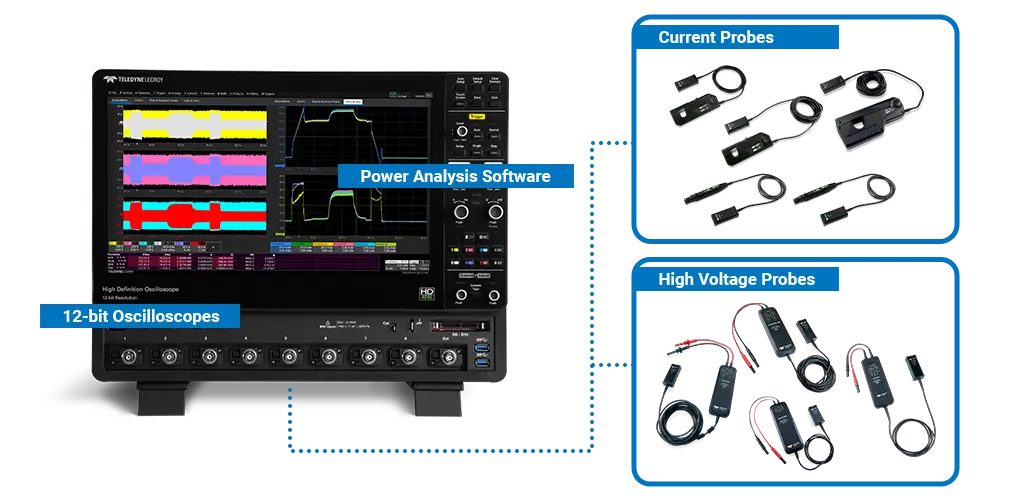
Test and measurement products used in data center power conversion product testing.

Data center additions are outpacing the ability to procure and supply cost-effective input power. Hyperscalers and supply/cost constraints are driving rapid adoption of new data center power conversion system. Data center design considerations include:

  • Incorporation of on-site power production and/or backup power capable of instantaneous response to meet AI training demands and prevent peak demand charges
  • Improvement of data center power distribution efficiency to minimize cost and utility load
  • Increase in power distribution voltage to minimize cost and/or increase power delivery density
  • Replacement of long-lead time items with fewer, better integrated power conversion systems

Data center power conversion demands are bringing together engineers from across the ecosystem to re-imagine and re-architect data center power distribution. This includes engineers of hyperscale data centers and engineers at power conversion equipment suppliers and power semiconductor manufacturers.

  • Engineers and technical architects of hyperscale data centers need to maximize efficiency and minimize operating energy cost
  • Device engineers need to make device characterization measurements on wide bandgap devices
  • Inverter subsection engineers need to design modular multi-level converters for solid-state transformers (SST), DC-DC converters, power supplies or battery-energy-storage systems (BESS)
  • Systems engineers need to measure dynamic power performance or efficiency of a 3-phase or 1-phase complete system

Teledyne LeCroy provides oscilloscopes, probes, and application software for every type of power conversion test - from MOSFET/IGBT device testing to inverter subsection testing to complete power conversion system analysis - kV to µV, MW to mW.

  • High-precision, low-noise 12-bit oscilloscopes with close to power analyzer accuracy
  • Power analysis software for complete measurement of AC, DC, dynamic and transient events to within a single semiconductor device switching period
  • Up to 1000 ARMS high bandwidth current probes and specialized high voltage probes optimized for 60 VDC, 1000 VDC, 2000 VDC and 6000 VDC (and higher) common-mode
Solid-State Transformers (SST)

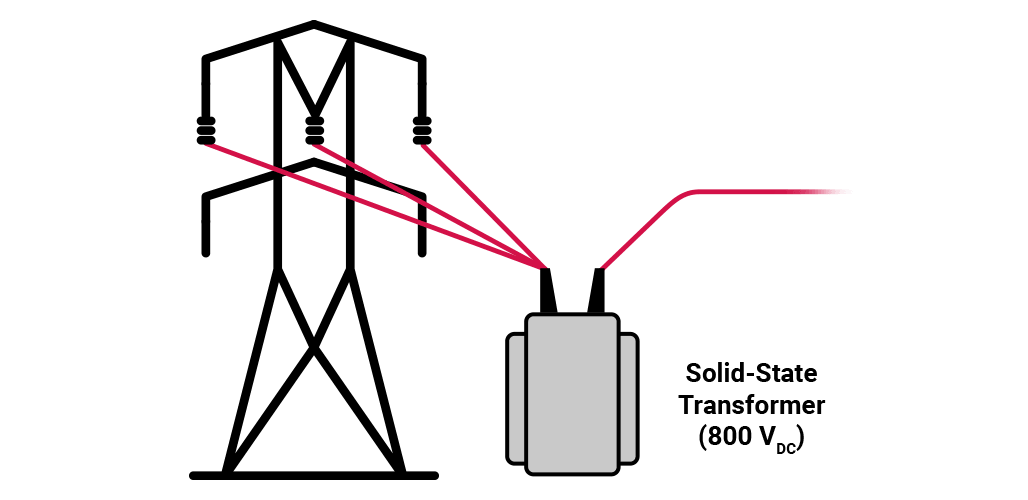
SSTs have rapidly progressed from lab concept to production reality. They speed data center deployment, interface natively with battery-energy-storage systems (BESS) and reduce data center power losses.

  • Measure total conversion efficiency from grid input to DC output during the development, prior to final validation
  • Measure dynamic response time to peaking or load-shedding events to within a semiconductor device switching cycle or within a 50/60 Hz power cycle
  • Test interrelationship of modular multi-level inverter subsections
  • Measure efficiency and operation under widely dynamic operating cycles – more than just static snapshots

Battery-Energy Storage Systems (BESS) and Uninterruptible Power Systems (UPS)

Utilities and Public Service Commissions (PSC) are pushing back on new high-power grid connections for hyperscale data centers, resulting in interconnection delays and onerous peak-load charges. BESS mitigates those issues.

  • Measure/validate BESS interaction and response time in conjunction with SST and data center demand
  • Understand power conditioning behavior to within a single semiconductor device switching cycle or within a 50/60 Hz power cycle
  • Correlate abrupt load changes and power shedding events to other system behaviors
  • Harmonically analyze DC output.

800 VDC Power Distribution Bus

Data centers are being designed with higher voltage DC buses to save cost, improve efficiencies, and standardize on the voltages that are becoming common in electric vehicle architectures.

  • Measure DC to AC transient currents up to 1000 ARMS and up to 1.5 MHz bandwidth with high accuracy current probe
  • Measure high voltage DC plus high-speed transients to 1% accuracy with high radiated emission rejection (best CMRR performance)
  • Correlate harmonic pollution on the DC bus to other equipment, power sources, or loads.

Power Supply Units (PSU)

Hyperscale data centers require PSUs to have 80 PLUS Titanium efficiency levels, which is widely adopted through the Open Compute Project (OCP).

  • Measure efficiency, power factor (PF) (for AC-DC designs), and total harmonic distortion (THD) early in the design cycle to optimize performance, prior to final validation
  • Acquire real-time design feedback during dynamic load conditions
  • Correlate control activities to power events in time periods as short as a power semiconductor device switching cycle

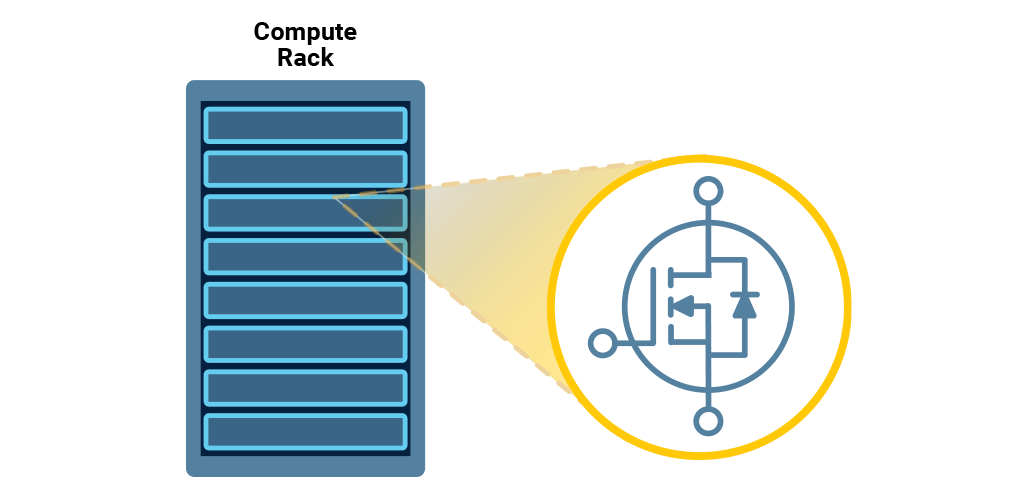
Compute Rack 48 V to 12 V DC-DC Converter Power Delivery

48V power architectures are facing stricter efficiency demands as rising power levels in AI data centers amplify losses, driving the need to optimize every stage of the 48V conversion chain for highest efficiency.

  • Most accurately characterize 48V GaN DC-DC conversion systems
  • Measure DC to AC transient currents up to 1000 ARMS and up to 1.5 MHz bandwidth with a 1000 A current probe
  • Industry’s only 60 V common-mode probe optimized for these types of measurements, 0.5% gain accuracy

PDN and power integrity on server motherboards

LeCroy High Definition Oscilloscopes (HDO®), probes, and software options provide the best capability to capture and analyze everything on your power rails during various load or load release conditions.

  • Power integrity analysis
  • PDN noise and spectral analysis on single or multiple rails
  • Digital power management IC (PMIC) characterization
  • Low dropout (LDO) and switching regulator measurements
  • Power rail probe and noise measurements


Resources

Name

Recommended Teledyne LeCroy Equipment List for Double Pulse Test (DPT)

Datasheet

How to Choose the Best High Voltage Oscilloscope Probe in 5 Minutes

Need to select a high-voltage oscilloscope probe? Confused by all the possible choices? Teledyne LeCroy offers the High-voltage Probe Selection Guide, an online tool to help you make an informed decision. Here's a breakdown of the basic points to consider.

Application Note
High Voltage Differential (HVD) Probes – Superior Performance
DL-ISO Probe for GaN MOSFETs and SiC IGBTs
Frequency Response Analysis (Bode Plot) Using an Oscilloscope
1000 A Oscilloscope Current Probe
Teledyne LeCroy – Current Probes
Automated Double Pulse Testing Using DPT-AUTOMATION Software

Join Teledyne LeCroy as we describe data center power distribution infrastructure and highlight the important role that power conversion products contribute to ensuring that data centers operate efficiently and reliably. Special emphasis will be placed on product testing of PDUs/PSUs that deliver DC power to servers.

In this webinar we describe new products and best practices and measurement techniques for validation and debug of 48 V power conversion systems.

How to Perform Double Pulse Testing (DPT) on GaN and SiC Devices

Join Teledyne LeCroy to see Double Pulse Testing performed on gallium nitride (GaN) and silicon carbide (SiC) power semiconductor devices. Learn more about various safety measures that need to be addressed before making measurements and what to infer from the captured waveforms.

Register for all

Take your motor drive analysis to the next level! Join Teledyne LeCroy in this on-demand Learning Lab series on measuring high-power 3-phase motor inverter and drive systems with an 8-channel high-resolution oscilloscope or motor drive analyzer. We’ll explore everything from static and dynamic AC line measurements to motor mechanical performance and more!

Power electronics designs have inherent measurement challenges. Proper probe selection and use is critical for operator, equipment and DUT safety and also has a large influence on the accuracy of the measurement.

Power Distribution Networks (PDNs) require careful design to ensure excellent power integrity, especially in high-speed designs. Join Teledyne LeCroy for our 8-part series as we walk you through the fundamentals of power integrity testing through to advanced topics with a large number of live demonstrations.

Why are data center power racks increasing from 100 kW to 1 MW?

AI accelerators and GPUs require significantly more power than legacy processors, driving higher power demand at the rack level. To support this, rack architectures are scaling accordingly: a 1 MW rack typically consists of multiple ~100 kW power shelves, each containing ~6 power supply units (PSUs). Individual PSU power levels have increased to ~20 kW, compared to the traditional 3.3 kW to 5 kW range.

Why is data center DC distribution increasing from 48Vdc to 800 Vdc?

AI data centers require significantly higher power levels compared to traditional data centers. Traditional 48 Vdc distribution results in extremely high currents at high power levels which would increase bus bar distribution costs and increase losses. To address this, the industry is shifting to 800 Vdc architectures, leveraging proven design approaches used in electrical vehicles. As power density continues to increase, it is expected that data center DC distribution will evolve to 1500 Vdc (an input voltage commonly used in high-power utility-scale solar photovoltaic inverters).

What role will solid-state transformers play in AI data centers?

Solid-state transformers (SSTs) are grid-tied converters, converting utility-supplied medium voltage AC (10–34.5 kVac) into 800V Vdc for efficient distribution within the facility. Their modular, multi-level architecture enables precise power control, higher efficiency, and improved scalability, making them well-suited for future high-power AI data centers. Their use also solves lead-time problems with conventional core/coil 50/60 Hz transformers.

Why are battery-energy-storage systems (BESS) becoming more important in AI data centers?

As power demand grows into the gigawatt range, BESS can supplement traditional UPS systems by providing backup power, peak-load shaving, and grid support services. Battery systems also help operators manage power availability and utility constraints.

Why are wide-bandgap semiconductors (SiC and GaN) being adopted in data center power conversion systems?

Silicon carbide (SiC) and gallium nitride (GaN) devices enable higher switching frequencies, improved efficiency, and greater power density compared to traditional silicon. These advantages help reduce power conversion losses and improve efficiencies while supporting the industry's move toward higher-voltage power architectures.

Will data centers eventually transition to fully DC-powered architectures?

Eliminating multiple AC/DC conversion stages can improve efficiency and simplify power distribution. As the industry adopts 800 Vdc distribution and solid-state transformers, fully DC-powered architectures are increasingly being explored for next-generation AI facilities.

Why are AI data centers requiring faster transient response from power supplies?

Modern AI GPUs can create rapid and significant changes in power demand. Advanced power supply designs are needed to maintain voltage stability, improve efficiency, and support the dynamic behavior of next-generation processors.

Why is power quality becoming more critical in AI data centers?

AI GPUs are highly sensitive to voltage fluctuations, transient events, and power disturbances. Advanced power quality monitoring helps ensure reliable operation, maximize uptime, and prevent costly interruptions to AI training and inference workloads.

Why are AI data centers integrating renewable energy and microgrids?

AI workloads are creating unprecedented demand for electrical power, often exceeding local grid capacity. Renewable generation, on-site energy storage, and microgrids help improve energy availability, reduce grid dependency, and support sustainability goals.

Are AI data centers exploring 1500 Vdc power distribution?

As power demands continue to increase beyond 1 MW per rack, higher distribution voltages can reduce current, minimize conductor losses, and improve overall power delivery efficiency. Many experts view 1500 Vdc as a potential next step beyond today's 800 Vdc architectures. Not coincidentally, 1500 Vdc is also used as the input voltage to utility-scale solar PV inverters.

Need Assistance or Information?

We’re here to help and answer any question you might have. We look forward to hearing from you